
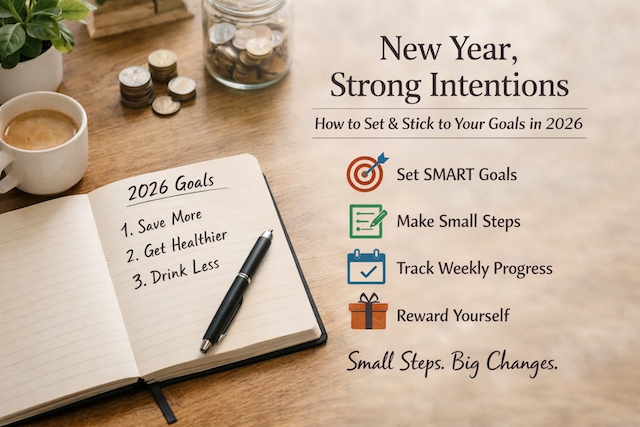
The start of a new year often comes with a surge of motivation. We set intentions with hope, energy, and a vision of who we want to become. Yet by February—or sometimes even sooner—those goals can start to feel overwhelming, unclear, or impossible to maintain.
So how do we set goals for 2026 that we actually follow through on?
The answer isn’t more willpower. It’s better structure, realistic planning, and compassion for how human brains work.
Start With SMART Goals
Before taking action, get clear on what you’re aiming for. A helpful framework is SMART goals:
Specific – Clearly define what you want
Measurable – You can track progress
Achievable – Within your capacity
Realistic – Fits your real life, not an ideal one
Time-sensitive – Has a clear timeline
Vague goals like “save more money” or “get healthier” are hard to stick to because your brain doesn’t know what “done” looks like. Specific goals give your nervous system direction and reduce overwhelm.
Break Big Goals Into Small, Manageable Chunks
Once you’ve identified your SMART goal(s), the key to consistency is breaking them down into smaller steps—monthly, and in some cases weekly.
When goals feel too big, our brains interpret them as threats, which leads to avoidance, procrastination, or giving up altogether. Smaller chunks feel safer, clearer, and far more achievable.
An Example: Turning Big Intentions Into Weekly Wins
Let’s say your goals for 2026 are:
Save $5,000 toward investments or savings
Lose 10 pounds to support health and longevity
Drink little to no alcohol
At first glance, those goals might feel intimidating. But watch what happens when we break them down:
$5,000 ÷ 52 weeks ≈ $96 per week
10 lbs ÷ 52 weeks ≈ 0.2 lbs per week
Suddenly, the goal isn’t “save thousands” or “lose 10 pounds.”
It’s “Can I save around $100 this week?”
“Can I make choices that support a quarter-pound of progress?”
Doesn’t that feel more doable?
Why This Works (Hint: Dopamine)
Each small success gives your brain a dopamine hit—the chemical linked to motivation and reward. Weekly progress builds:
Confidence
Self-esteem
Momentum
Trust in yourself
Instead of waiting until the end of the year to feel successful, you experience success every week. That consistency is what keeps people going.
Accountability Matters More Than Motivation
Motivation comes and goes. Accountability keeps you moving.
One powerful (and often uncomfortable) strategy is to tell people your goals. Share them with conviction. When others know what you’re working toward, they’re more likely to check in—and that external accountability can make a huge difference when motivation dips.
You don’t have to tell everyone. Just one or two trusted people is enough.
Don’t Forget Rewards — You’re Human, Not a Robot
We are still animals at our core, and we respond well to rewards and consequences. Build rewards into your plan.
For example:
A nice dinner after a savings milestone
Ice cream or a treat after consistent workouts
A small purchase or experience when you hit a monthly goal
Rewards reinforce behavior and make the process enjoyable rather than punishing.
Final Thoughts: Progress Over Perfection
Sticking with your intentions throughout 2026 isn’t about being perfect. It’s about being consistent, realistic, and kind to yourself.
Set clear goals. Break them down. Celebrate progress. Adjust when life happens. And remember—small, steady steps over time lead to meaningful, lasting change.
You don’t need a new you this year.
You just need a supported, intentional one.