
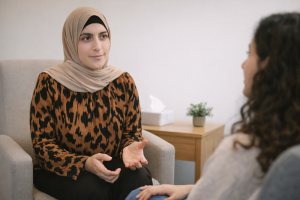
Understanding Matters
For many Lebanese individuals and families, mental health is shaped by culture, history, migration, and collective resilience. While therapy can be helpful for anyone, working with a therapist who understands Lebanese culture can create a deeper sense of safety, trust, and connection — all of which are essential for meaningful healing.
The Lebanese Experience and Mental Health
Lebanese people often carry layers of lived experience that extend beyond individual stressors. These may include:
- Intergenerational trauma related to war, displacement, or political instability
- Immigration and acculturation stress
- Strong family ties paired with complex family dynamics
- High expectations, responsibility, and pressure to succeed
- Stigma around mental health and emotional vulnerability
- Grief related to loss of homeland, identity, or community
Because of these factors, emotional distress may show up as anxiety, somatic symptoms, irritability, burnout, guilt, or emotional suppression, rather than openly expressed sadness or fear.
Why Therapy Can Feel Different for Lebanese Clients
In many Lebanese households, emotional struggles are often minimized, spiritualized, or reframed as something to “push through.” While resilience is a strength, it can also make it difficult to ask for help.
Common internal barriers to therapy may include:
- Fear of shame or judgment
- Loyalty to family expectations
- Feeling responsible for others’ wellbeing
- Difficulty setting boundaries without guilt
- A belief that suffering should be endured quietly
A culturally informed therapist understands these dynamics and helps clients explore them with compassion rather than judgment.
The Value of Working With a Lebanese Therapist
Choosing a Lebanese therapist can reduce the need to constantly explain cultural context. Shared understanding allows therapy to go deeper, faster, and more safely.
A Lebanese therapist is more likely to understand:
- The importance of family, honour, and collective identity
- Nuanced parent-child dynamics
- Cultural expectations around gender roles and responsibility
- The emotional impact of migration, war narratives, and loss
- The tension between independence and loyalty
This cultural attunement can help clients feel truly seen — not just as individuals, but within the systems and histories that shaped them.
How Therapy Can Help Lebanese Clients Heal
Therapy tailored to Lebanese clients can support:
- Anxiety and chronic stress management
- Healing intergenerational and cultural trauma
- Navigating family boundaries with respect and confidence
- Processing grief, loss, and identity transitions
- Balancing cultural values with personal needs
- Developing emotional expression without guilt or shame
Therapy does not mean rejecting culture — it means learning how to care for yourself within it.
Meet Sirine Morra
Sirine Morra offers culturally sensitive, compassionate therapy for Lebanese and Middle Eastern clients. She understands the complexities of navigating mental health within cultural, familial, and societal expectations.
Sirine provides a safe, respectful space to explore:
- Anxiety, stress, and emotional overwhelm
- Family and relational challenges
- Identity and cultural transitions
- Trauma and grief
- Self-worth and boundary-setting
Her approach honours cultural values while empowering clients to reconnect with their own emotional needs and inner strength.
You Don’t Have to Explain Yourself Here
For many Lebanese clients, therapy with Sirine feels relieving because they don’t have to translate their culture, justify their experiences, or minimize their pain. They can simply show up as they are.
If you’re Lebanese and considering therapy, working with someone who understands your background can make all the difference.
👉 Book an appointment with Sirine Morra:
https://kaimanapsychology.janeapp.com/locations/alberta/book#/staff_member/3